

Introduction
For most of my life, "go back to your country" was meant as an insult.
It was the sentence people used when they wanted to remind immigrants that belonging had conditions. You could speak the language, go to school there, work, pay taxes, follow the rules, and still be treated like your presence was temporary.
But lately, the sentence has started to sound different. Not because the insult became less ugly, but because the answer became more interesting.
"Go back to your country."
Maybe I will.
But maybe not in the way you meant it.
Maybe I will move somewhere else because I can. Maybe I will choose a country that fits me better. Maybe I will build a life in a place that was not assigned to me by birth, passport, or other people's expectations.
And maybe one day, I will go back to the country of my roots. Not because I was rejected somewhere else, but because I have something to bring back.
That is the part people often miss.
For many second generation immigrants, the question is no longer only "where am I from?" The more useful question is: where does my life make sense now?
Germany Raised Me, But It Never Fully Felt Like Home
I was born and raised in Germany to Vietnamese parents.
Outside the four walls of our apartment, my life was German. School was German. Friends were German. The streets, offices, paperwork, public systems, jokes, rules, and social expectations were German.
Inside the four walls, my life was Vietnamese. The food was Vietnamese. The values were Vietnamese. The expectations were Vietnamese. The way we understood family, respect, sacrifice, work, money, and responsibility came from Vietnam.
German culture came through school, public life, and television. Vietnamese culture came through my parents.
So I integrated well. I spoke the language. I understood the nuances. I learned how the system worked. I absorbed many German values: order, structure, reliability, directness, education, public responsibility.
And I am genuinely grateful for that. Germany gave me access to things that shaped my entire life. School was free. University was free. The education was strong. I could speak my opinion in class. I could question teachers. I could learn by understanding the logic behind something, not only by memorizing the answer.
That shaped how I think.
If I had grown up in Vietnam or Korea, my life would have been completely different. Not necessarily worse. Just different. Different problems, different pressure, different systems. More private education. More memorization. More studying to survive exams. Maybe less space to question. Maybe less freedom to explore who I was before deciding what I wanted to become.
So this is not a simple story of rejecting Germany. I do not look back at Germany and feel nothing. Germany raised part of me.
But being raised somewhere is not the same as belonging there.
Integration Is Not The Same As Belonging
This is the part many people misunderstand: second generation immigrants can be fully integrated and still not feel like they belong.
Integration is functional. You speak the language. You know the rules. You understand the bureaucracy. You can navigate the system without needing someone to translate the country for you.
Belonging is different. Belonging is the feeling that the country sees you as part of itself, not as a well-behaved guest who performed integration correctly.
For a long time, many of us accepted the gap between those two things. We were grateful. We worked hard. We did well in school. We built careers. We became the kind of immigrant story countries like to point at when they want to prove the system works.
And in many ways, it did work. Our parents came with very little. Their children graduated from universities, built careers, started companies, paid taxes, and became fluent in societies that were not built with them in mind.
That is not nothing.
But there is a strange moment that happens when you realize you can do everything right and still not feel at home. Not because one person said something racist. Not because of one bad experience. But because the country around you starts to feel less aligned with the person you have become.
The mood changes. Politics changes. Public trust changes. The way people talk about immigrants changes. The future you imagined in that country starts to feel smaller than the life you know you could build somewhere else.
At some point, the question becomes less emotional and more practical:
- Am I staying because this country still fits me?
- Or am I staying because I was taught to be grateful?
- Am I building a life, or just maintaining one?
- If I had the choice today, would I still choose this place?
For me, the honest answer became no.
Korea Was Not An Escape. It Was A Match.
I did not move to Korea because I hated Germany.
I moved because Korea felt like a better match for the person I had become.
That distinction matters. Leaving does not always mean running away. Sometimes leaving is the first honest decision after years of trying to make a life fit inside a context that no longer fits you.
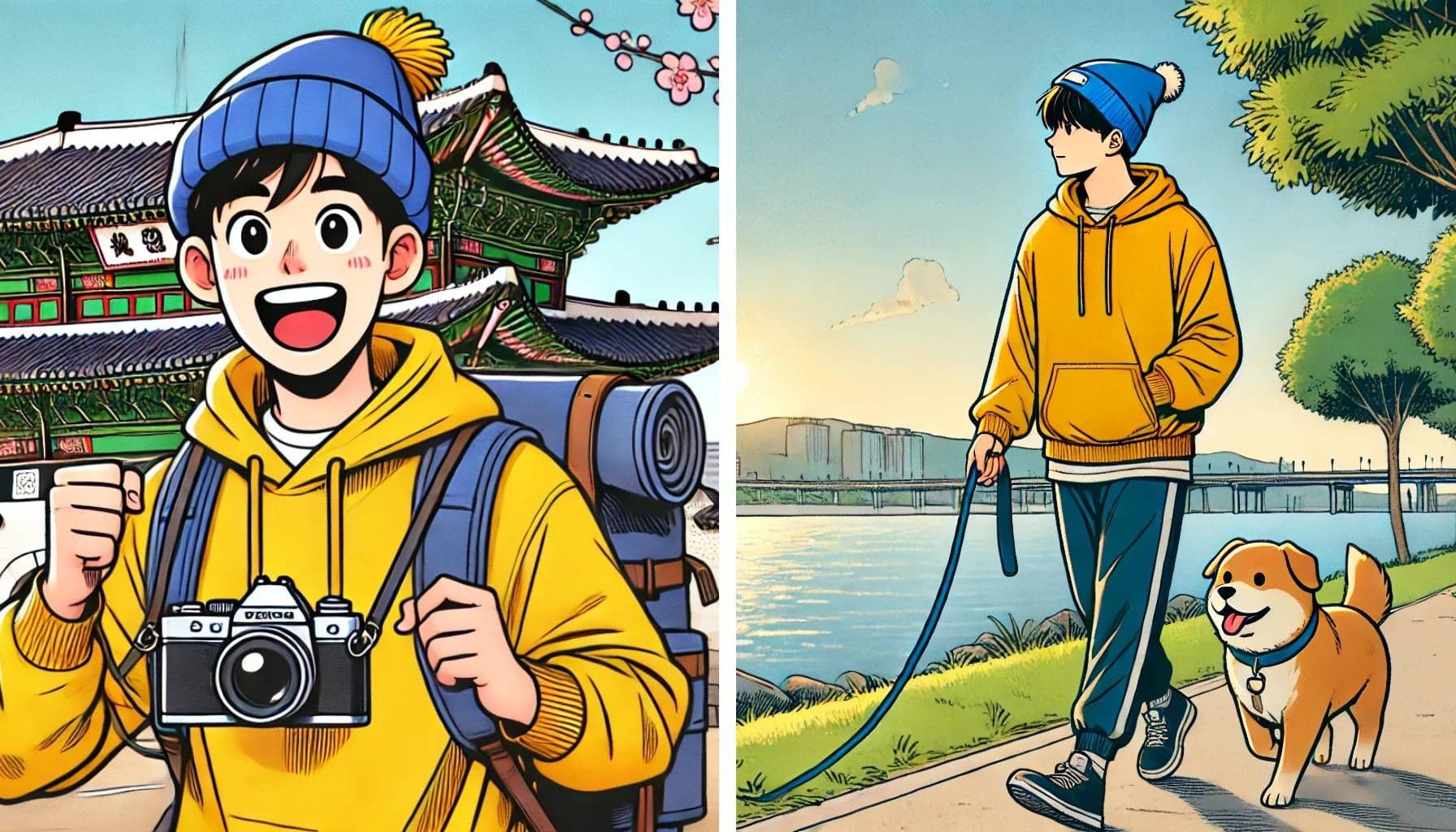
Korea was not a random fantasy. It was tested over time. First through curiosity. Then through culture. Then through an exchange semester. Then repeated visits. Then a working holiday. Then eventually building a life and business here.
It was not one big leap. It was iteration.
And with every step, I noticed something I did not feel in Germany anymore: my life made more sense here.
Not because Korea is perfect. It is not. Every country has its own systems, contradictions, pressures, blind spots, and difficulties. Korea has bureaucracy. Korea has hierarchy. Korea has social pressure. Korea has immigration limits. Korea has problems that can be deeply frustrating as a foreigner.
But the question was never whether Korea was perfect.
The question was whether I could build a coherent life here.
And the answer was yes.
Korea gave me a different kind of energy. The pace matched me. The density matched me. The ambition matched me. The way people build, move, adapt, and respond to change felt familiar in a way Germany never fully did.
That does not make Korea my "real" country in some official identity sense. It makes Korea the home I chose.
And choice changes everything.
The Real Privilege Is Having Options
For our parents' generation, migration was often survival.
They left because staying was too difficult, too unstable, too dangerous, too limited, or simply offered too little future for their children. Their move was not always romantic. It was practical. Sometimes painful. Often necessary.
For the second generation, the situation is different. We inherited the results of their sacrifice: passports, education, languages, professional skills, cultural fluency, and the ability to compare systems from the inside.
That creates a different kind of life question.
Our parents often had to ask:
- Where can we survive?
- Where can our children have a better chance?
- Which country will offer stability?
Many of us now get to ask:
- Where do I actually want to build?
- Which system fits the way I think?
- Where do I feel safe, useful, and alive?
- Which country gives me room to become more myself?
That shift is enormous.
It means staying is a choice. Leaving is a choice. Returning is a choice. Building a life across multiple countries is also a choice.
This is why "go back to your country" does not land the same way anymore. It assumes there is only one country to go back to. But many of us were shaped by more than one.
I was raised in Germany. My family roots are Vietnamese. I made Korea my home. I was also shaped by American media, internet culture, software, business, and global systems.
So which country is "mine"?
Maybe the better answer is: the country I choose to build in.
Roots Are Not A Cage. They Are A Direction.
For a long time, I thought of Vietnam mostly through my parents.
It was their country. Their memories. Their language. Their food. Their history. Their sacrifices. The place they left so their children could have a different life.
But after going back to Vietnam after a long time, I felt something shift.
Vietnam was not just the country my parents left. It was a country moving forward. The economy was growing. Things were becoming more organized. Cities felt alive. Systems that used to feel chaotic started to work better. People were building. Friends had moved back. Others were seriously considering it.
There was a feeling I did not expect:
- This place is not only where my family came from.
- It is a place where the future is still being built.
- And maybe I have something to contribute.
That does not mean Vietnam automatically becomes home. Roots do not solve belonging by themselves. The country of your ancestry can feel familiar and foreign at the same time. You may understand the food, the family values, and the emotional codes, but still struggle with the bureaucracy, work culture, hierarchy, or pace of life.
Returning to your roots does not automatically mean belonging.
But it can mean responsibility. Or curiosity. Or possibility.
It can mean asking: what did I learn abroad that could be useful here? What systems did I experience in Germany, Korea, and elsewhere that could be translated back into this context? What kind of bridge can I build because I understand more than one world?
That is where the idea becomes interesting to me.
Not moving back because of nostalgia. Not moving back because the West disappointed me. Not moving back because ancestry demands it.
But maybe one day moving closer to my roots because I can bring something back.
The Diaspora Advantage
Diaspora people carry a strange kind of capital. Not only money. Perspective.
We know what functioning public systems can look like. We know how Western education trains people to question, debate, analyze, and build from first principles. We know how international companies work. We understand branding, technology, software, design, media, operations, and global customer expectations.
But we also carry cultural memory. We understand why family matters differently. Why hierarchy matters. Why saving face matters. Why risk feels different when your family history includes war, poverty, migration, or loss.
That combination is valuable. It lets us translate between worlds.
And in countries that are developing quickly, translation is not a soft skill. It is infrastructure. Someone has to connect local context with global systems. Someone has to understand why Western ideas do not copy-paste cleanly into Asian markets. Someone has to know which parts of the old system should be respected, which parts should be improved, and which parts are only kept alive because nobody has built a better process yet.
That is where diaspora people can contribute. Not as saviors. Not as outsiders coming back to "fix" the country. But as people who were shaped by multiple systems and can see the gaps between them.
The value is not that we are better because we grew up abroad.
The value is that we have comparison.
Comparison is powerful. It helps you see that no system is natural. Every system was built. Every system can be improved. Every system has tradeoffs. Once you understand that, you stop asking which country is perfect and start asking where your experience can create the most value.
Going Back Is Not Going Backward
This is the reframe.
It was never only about going back to your country. It was about realizing you are allowed to choose the country that fits the next version of your life.