

Introduction
As someone who experienced immigration firsthand, born to Vietnamese refugee parents in Germany, I've lived on both sides of this conversation. My parents fled Vietnam after the war, settled in Germany, learned the language, worked their entire careers, and retired there. I grew up in an environment where 20-30% of my classmates had immigration backgrounds, and as long as you spoke German and followed local norms, you were simply part of the community. I never felt like an outsider.
Germany's approach to immigration during my childhood was relatively controlled, and there was a strong emphasis on cultural adaptation. Immigrants were expected to integrate, and in return, Germans were generally welcoming. Of course, things have shifted since the 2010s, but that's a different discussion.
Now, as an adult living in Korea, I see immigration through a completely different lens. Here are some key observations I've made about how immigration plays out in Korean society.
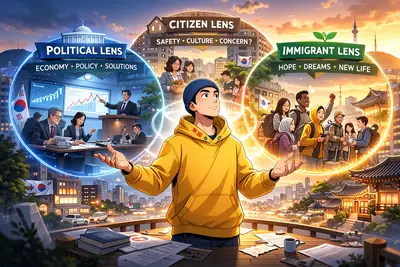
👔 The Political Lens: Economic Necessity
For many politicians and policymakers, immigration is primarily an economic tool. Korea faces a rapidly aging population and declining birth rates, creating labor shortages across industries.
What they see: Immigration is necessary to keep the economy running. Foreign workers fill gaps that locals are unwilling or unable to fill.
This lens often results in policies that welcome foreign workers but limit their pathways to permanence. The emphasis is on utility rather than belonging.
🏘️ The Citizen Lens: Guests Who Will Leave
Many Korean citizens view immigrants as temporary visitors who are here for a specific purpose and will eventually return home. This perspective is rooted in Korea's historically homogeneous society.
What they see: Korea is "our" country with a unique culture that should be protected. Foreigners are welcome as guests, but not as permanent members of society.
A lot of tension comes from anonymity. When we don't know each other, differences feel bigger. Media narratives can amplify fear. It's easy to be suspicious of an abstract "group." It's harder to fear someone who lives next door.
🌱 The Immigrant Lens: Hope for a Better Future
For immigrants themselves, moving to Korea represents hope, a chance for better opportunities, education for their children, or escape from difficult circumstances. Many come with dreams of building a life, not just earning money temporarily.
What they see: A desire to contribute meaningfully to Korean society. Hope that their children can grow up with better opportunities. Pride in their heritage while wanting to be part of Korean society.
Many immigrants face the painful reality that no matter how long they stay or how well they integrate, they may never be fully accepted as "Korean."
👀 Bringing the Three Lenses Together
Imagine looking at Korea's immigration story through three separate filters, each one shows you part of the truth, but only in black and white. The political lens shows economic charts and workforce gaps. The citizen lens captures cultural boundaries and historical identity. The immigrant lens reveals hope and struggle.
But when you overlay all three lenses together? That's when the full-color picture emerges.
The real shift doesn't start with policy. It starts with people.
🤝 When Immigrants Become Neighbors
When citizens begin to see immigrants not as "foreigners" but as classmates, coworkers, friends, the mindset changes.
You defend people you know. You support people you've shared a meal with. You speak up for people who are part of your community.
The more immigrants contribute, participate, and show up in society, the more normal their presence becomes. Not as outsiders. Just as people.
And when citizens understand immigrant experiences, they naturally bring that awareness into conversations, into workplaces, and eventually even into political discussions. Change becomes organic.
🌏 A Future Without "Others"
If we move from "us vs. them" to "we," the conversation changes.
We all want stability. We all want opportunity. We all want a safe place for the next generation.
True harmony comes not from erasing differences, but from creating a society where:
- Politicians see immigration as investment in Korea's future
- Citizens view immigrants as neighbors and colleagues, not just guests
- Immigrants feel genuinely welcomed and valued for who they are
At the end of the day, before nationality, before culture, before passport, we are human beings.
And maybe that's the lens that matters most.
The question isn't whether Korea needs immigration. It's whether Korea is ready to embrace immigrants not just as workers, but as people who will shape the country's future alongside those already here.
🏠 Looking for Housing in Korea? Renting Made Easy!
10% Off Service Fee with code:
KIMNINJA10
Enkostay Benefits:
✅ No Deposit ✅ Online Booking ✅ Immigration-friendly docs ✅ Flexible Contracts
Perfect for:
👨🏻💻 Digital Nomads 🎓 Students ✈️ Long-Term Travelers 🧳 Working Holiday
📬 Weekly Tips in Your Inbox
Whether you’re visiting, staying long-term, or relocating. I share honest insights, guides, and tools to help you navigate life in Korea.
Join 1,000+ readers learning how to live smarter in Korea, from visas to vibes.
👋 About Kim Ninja

Kim Ninja (Nguyen Huy Kim)
🧭 Cultural Guide · ✍️ Storyteller · 🎨 Curator
📢 Creator helping foreigners understand and thrive in Korea
🗺️ I turn everyday challenges into comics, guides, and stories
The blog published by Kim Ninja (Huy-Kim Nguyen) is available for informational purposes only and is not considered legal advice on any subject matter.