

Introduction
After being away for the summer, I left my home alone for a while.
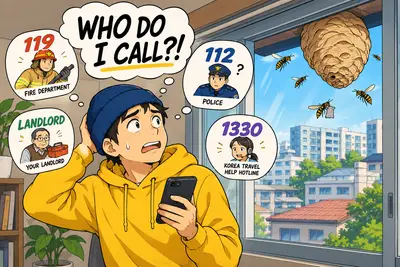
When I came back, I noticed something outside my place: a wasp’s nest was being built right infront of my window!
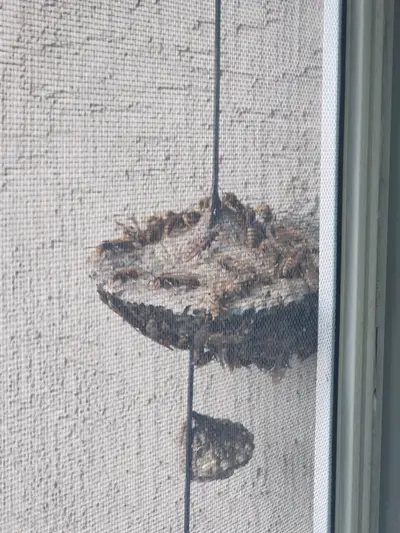
Luckily, the wasps did not come inside. They also did not disturb me. But still, I was not sure what to do.
So I called my landlord.
He came the next day, looked at it, and told me:
“For this kind of situation, you can just call 119.”
I was surprised.
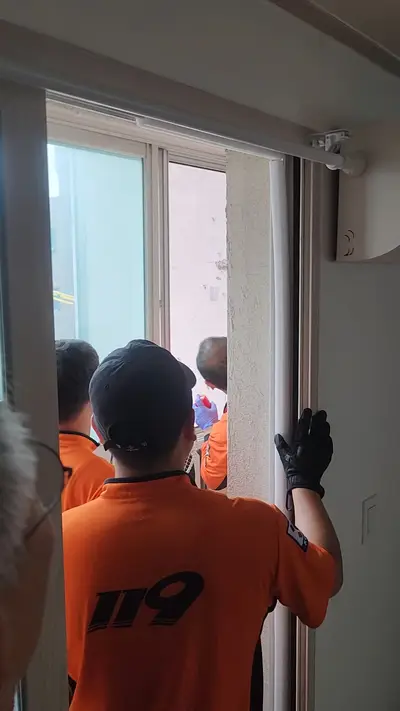
In my mind, 119 was only for big emergencies like fires or ambulance situations. But in Korea, firefighters can also help with some safety problems, including things like wasp nests.
That made me wonder:
For different situations in Korea, who should we call?
If you are a foreigner living in Korea, it can be confusing. You may not know if you should call the police, the fire department, your landlord, immigration, or a travel hotline.
So here is a simple guide.
Quick List: Important Numbers in Korea
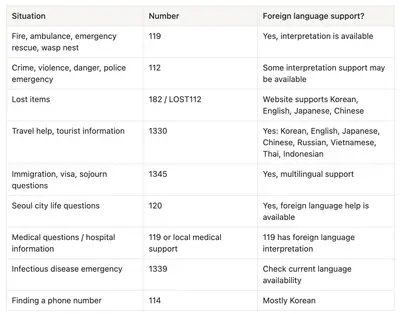
1. Call 119 for Fire, Ambulance, and Rescue
In Korea, 119 is the emergency number for:
- Fire
- Ambulance
- Emergency rescue
- Serious accidents
- Safety problems
- Some animal or insect-related danger, like a wasp nest
This is the number my landlord told me to call for the wasp nest.
If the wasps are outside and not entering your home, it may not feel like a big emergency. But if it is near your door, window, balcony, rooftop, or a shared building area, it can become dangerous.
You can call 119 and explain the situation.
119 can also provide hospital information, illness consultation, first-aid methods, and interpretation for foreign nationals. The service is available 24/7, with support in languages including English, Chinese, Japanese, Mongolian, and Vietnamese.
Example sentence
If you can speak simple Korean:
집 밖에 말벌집이 있어요. 도와주세요. There is a wasp nest outside my home. Please help.
Or in English:
There is a wasp nest outside my home. It is near my window / door / balcony.
2. Call 112 for Police Emergencies
Call 112 if you need the police.
Use 112 for situations like:
- Crime
- Violence
- Threats
- Theft
- Someone breaking into your home
- A serious public safety problem
- A dangerous person
- A traffic accident where police are needed
If you are in immediate danger, call 112 right away.
Example sentence
I need police help. I am at this address.
If you can say it in Korean:
경찰이 필요해요. I need the police.
3. Call 1330 for Travel Help
Call 1330 for the Korea Travel Hotline.
This is useful for tourists, but also helpful for foreigners living in Korea when you need general information.
You can ask about:
- Directions
- Tourist information
- Transportation
- Translation help for travel situations
- What to do in certain travel-related problems
The Korea Travel Hotline is available 24/7. It supports Korean, English, Japanese, Chinese, Russian, Vietnamese, Thai, and Indonesian.
Domestic number
1330
From outside Korea
+82-2-1330
4. Call 1345 for Immigration and Visa Questions
Call 1345 for immigration questions.
This is the Immigration Contact Center.
Use it for questions about:
- Visas
- Alien registration card / residence card
- Sojourn status
- Extension of stay
- Change of visa status
- Re-entry permits
- Immigration office appointments
- HiKorea services
If your question is about your visa, do not call 119 or 112. Call 1345.
Domestic number
1345
From outside Korea
+82-2-1345
5. Call 120 for Seoul City Life Questions
If you live in Seoul, 120 is the Dasan Call Center.
This is useful for city-related questions, such as:
- Public services
- Local complaints
- Trash and recycling
- Transportation questions
- City office information
- Daily life questions in Seoul
The Seoul Call Center can answer questions about living in Seoul and respond to suggestions or complaints. It is open 24/7.
Domestic number
120 or 02-120
From outside Korea
+82-2-731-2120
6. Call 182 or Use LOST112 for Lost Items
If you lose something in Korea, you can use LOST112, the lost and found system run by the police.
This can help with lost items like:
- Wallet
- Phone
- Bag
- ID card
- Passport
- Transportation card
- Items left in public places
You can also check the website:
The website supports Korean, English, Japanese, and Chinese.
7. Call 1339 for Infectious Disease Emergencies
For infectious disease emergencies, call 1339.
This number may be useful for:
- Infectious disease questions
- Public health emergencies
- Disease-related guidance
Language support can change depending on the service and situation, so check current information if you need non-Korean support.
8. Call Your Landlord or Building Manager for Home Problems
Not every problem needs an emergency hotline.
Sometimes the best person to call first is your:
- Landlord
- Building manager
- Real estate agent
- Goshiwon / officetel manager
- Apartment management office
Call them for things like:
- Water leaking
- Broken heater
- Broken air conditioner
- Door lock problems
- Mold
- Building maintenance
- Noise from building facilities
- Problems in shared spaces
But if there is danger, call the emergency number first.
For example:
- Gas smell: call emergency services or the gas company immediately
- Fire: call 119
- Someone breaking in: call 112
- Medical emergency: call 119
9. Call Your Embassy for Passport or Legal Trouble
If you lose your passport or have a serious legal problem, contact your embassy.
Your embassy can help with:
- Lost passport
- Emergency travel document
- Arrest or detention
- Serious accident
- Death of a family member
- Emergency contact with family
They usually cannot solve normal housing problems or visa problems for you, but they can guide you in serious situations.
You can search:
“Embassy of [your country] in Korea”
Save the emergency number in your phone.
Simple Rule: Who Should I Call?
Here is a simple way to remember:
- Danger, fire, ambulance, rescue: call 119
- Crime or police danger: call 112
- Visa or immigration: call 1345
- Travel or tourist help: call 1330
- Seoul city life questions: call 120
- Lost item: call 182 or check LOST112
- Home repair: call your landlord or building manager
- Passport problem: call your embassy
Save These Numbers Before You Need Them
When something happens, it is easy to panic.
You may forget the number. You may not know what to say. You may worry because your Korean is not good.
So it is better to save these numbers in your phone now.
I recommend saving them like this:
- Korea Emergency - 119
- Korea Police - 112
- Korea Travel Help - 1330
- Korea Immigration - 1345
- Seoul City Help - 120
- Korea Lost Items - 182
- My Landlord
- My Building Manager
- My Embassy
Hopefully, you will not need most of them.
🏠 Looking for Housing in Korea? Renting Made Easy!
10% Off Service Fee with code:
KIMNINJA10
Enkostay Benefits:
✅ No Deposit ✅ Online Booking ✅ Immigration-friendly docs ✅ Flexible Contracts
Perfect for:
👨🏻💻 Digital Nomads 🎓 Students ✈️ Long-Term Travelers 🧳 Working Holiday
📬 Weekly Tips in Your Inbox
Whether you’re visiting, staying long-term, or relocating. I share honest insights, guides, and tools to help you navigate life in Korea.
Join 1,000+ readers learning how to live smarter in Korea, from visas to vibes.
👋 About Kim Ninja

Kim Ninja (Nguyen Huy Kim)
🧭 Cultural Guide · ✍️ Storyteller · 🎨 Curator
📢 Creator helping foreigners understand and thrive in Korea
🗺️ I turn everyday challenges into comics, guides, and stories
The blog published by Kim Ninja (Huy-Kim Nguyen) is available for informational purposes only and is not considered legal advice on any subject matter.